What is ETL (in the domain of data and AI) ?
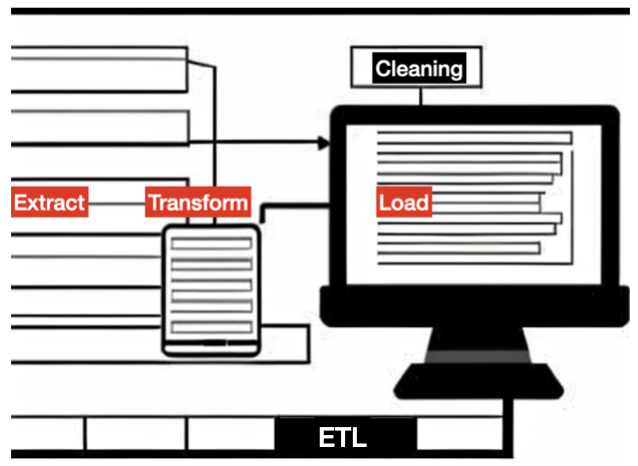
ETL stands for Extract, Transform, Load, which is a fundamental concept in data integration and data warehousing. In the domain of data and AI, ETL refers to the process of extracting data from various sources, transforming it into a standardized format, and loading it into a target system, such as a data warehouse or a data lake.
The three main stages of ETL are:
- Extract: This stage involves retrieving data from multiple sources, such as databases, files, or APIs, using ETL tools or programming languages like SQL or Python.
- Transform: In this stage, the extracted data is cleaned, formatted, and transformed into a standardized format to ensure consistency and accuracy. This may involve data normalization, handling missing values, and applying business logic rules.
- Load: The transformed data is then loaded into the target system, which can be a data warehouse, data lake, or a big data platform.
ETL is often used in data integration and data warehousing applications to:
- Consolidate data from multiple sources
- Standardize data formats
- Improve data quality
- Enhance data security and access control
- Support business intelligence and analytics
In the context of AI, ETL can also be applied to preprocess data for machine learning model training. This involves extracting relevant features from the data, transforming them into a suitable format, and loading them into a machine learning platform.
Some popular ETL tools used in data and AI include:
- Microsoft SQL Server Integration Services (SSIS)
- Oracle Data Integrator (ODI)
- Talend
- AWS Glue
- Google Cloud Dataflow